


The secretarybirds of sub-Saharan Africa have a unique lifestyle: They can fly, but they spend most of their lives on foot, using their powerful feet to deliver deadly kicks to venomous snakes across the African grasslands.
Despite their hunting prowess as the “tallest raptors in the world” — and their lack of natural predators as adults — secretarybirds are an endangered species. Like many other wild animals, the biggest threat they currently face is rapid habitat loss.
Due to their shrinking habitats, experts estimate that as few as 6,700 secretarybirds remain in the wild today.
Fortunately, at the Chester Zoo in England, bird keepers have been trying to revive the birds of prey through a specialized breeding program.
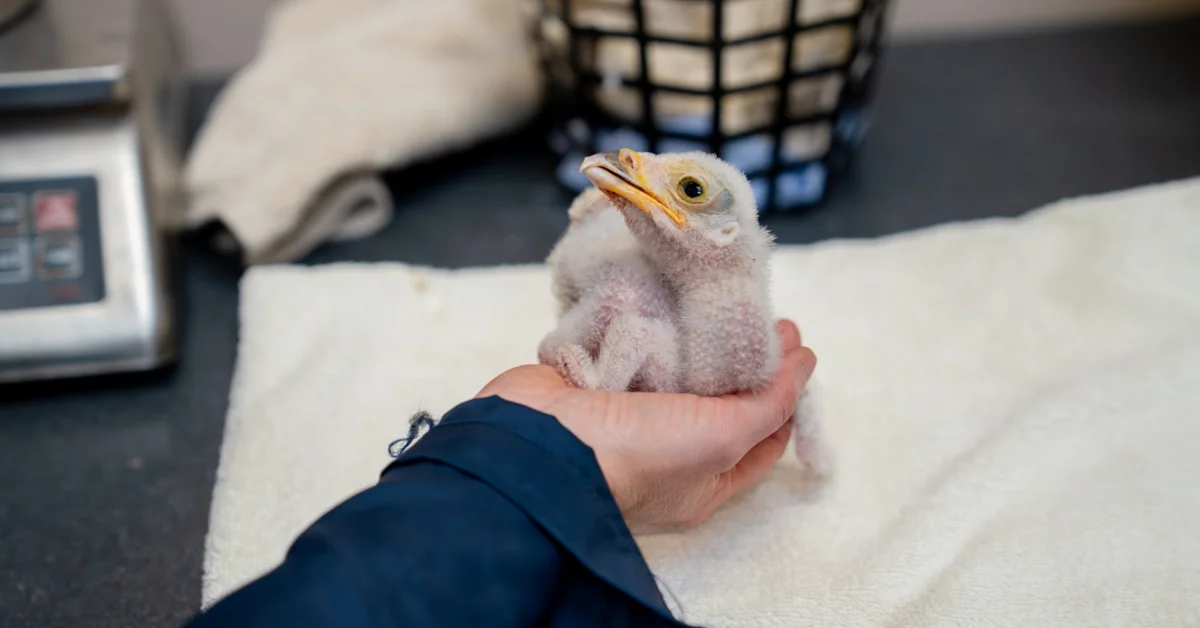
On August 5, the Chester Zoo announced the arrival of five secretarybird hatchlings — a monumental feat that was nearly a century in the making.
“This is the first time secretarybirds have ever bred at Chester Zoo in our 95-year history,” Jamie Cartwright-Stock, a bird keeper behind the breeding success at Chester Zoo, said in a statement. “Seeing five healthy chicks hatch in such a short space of time is an incredible achievement for everyone involved.”
The chicks were born to a breeding pair, named John and Jolene. For years, the bird keepers had watched as Jolene laid eggs that never hatched, while her mate, John, appeared disinterested.
But in the last year, John took a sudden interest in parenting. For the first time since they were paired, he took turns sitting on the eggs beside his mate.
“The most recent breeding has been so successful because John has stepped up and shared incubation and is proving to be a brilliant Dad,” Jonathan Beilby, assistant team manager for birds at Chester Zoo, told Discover.
Jolene. Courtesy of the Chester Zoo
“Since John and Jolene arrived at the zoo only a few years ago, we’ve spent a considerable amount of time learning everything we can about their courtship behaviours, breeding biology and exactly what conditions they need to reproduce successfully,” Cartwright-Stock explained.
“We’ve refined every aspect of their care in a special behind-the-scenes breeding facility at the zoo to reach this point — it really feels like we’ve reached a major breakthrough.”
Now an exciting new phase in the breeding process begins.
“We still have so much to learn though, particularly about how secretarybirds are reared and how the youngsters develop,” Cartwright-Stock stated.
The first two chicks to hatch were hand-reared by the bird keepers so they could track each stage of their development with the utmost precision. John and Jolene raised the next three, which were hatched 10 days apart, by themselves.
“Given how precious those first chicks were, we decided to hand-rear them and document every stage of their development, recording everything we learned so it can now be shared with other conservation zoos and strengthen the breeding programme globally.”
Courtesy of the Chester Zoo
Across Europe’s conservation breeding program for secretarybirds, there are just 79 birds in total. Andrew Owen, Head of Birds at Chester Zoo, said that they were eager to share their findings with the world.
“Every chick hatched in conservation zoos is becoming increasingly important for the future of this remarkable species,” he said. “With five new chicks, we’re playing a leading role in the conservation of these incredible birds.
Owen also underscored the importance of their conservation efforts.
“Secretarybirds have disappeared from parts of Africa where they were once common, making breeding successes like this more important than ever,” he emphasized.
“By monitoring and sharing everything we learn about these chicks, we can help improve breeding success across the entire safety-net population in zoos,” he added. “Combined with efforts to protect habitats in the wild, that gives threatened species like the secretarybird the best possible chance of long-term survival.”
You may also like: One of the world’s most endangered mammals is ‘extremely trusting of humans.’ Chileans are racing to save it
Featured Image: Courtesy of the Chester Zoo
