


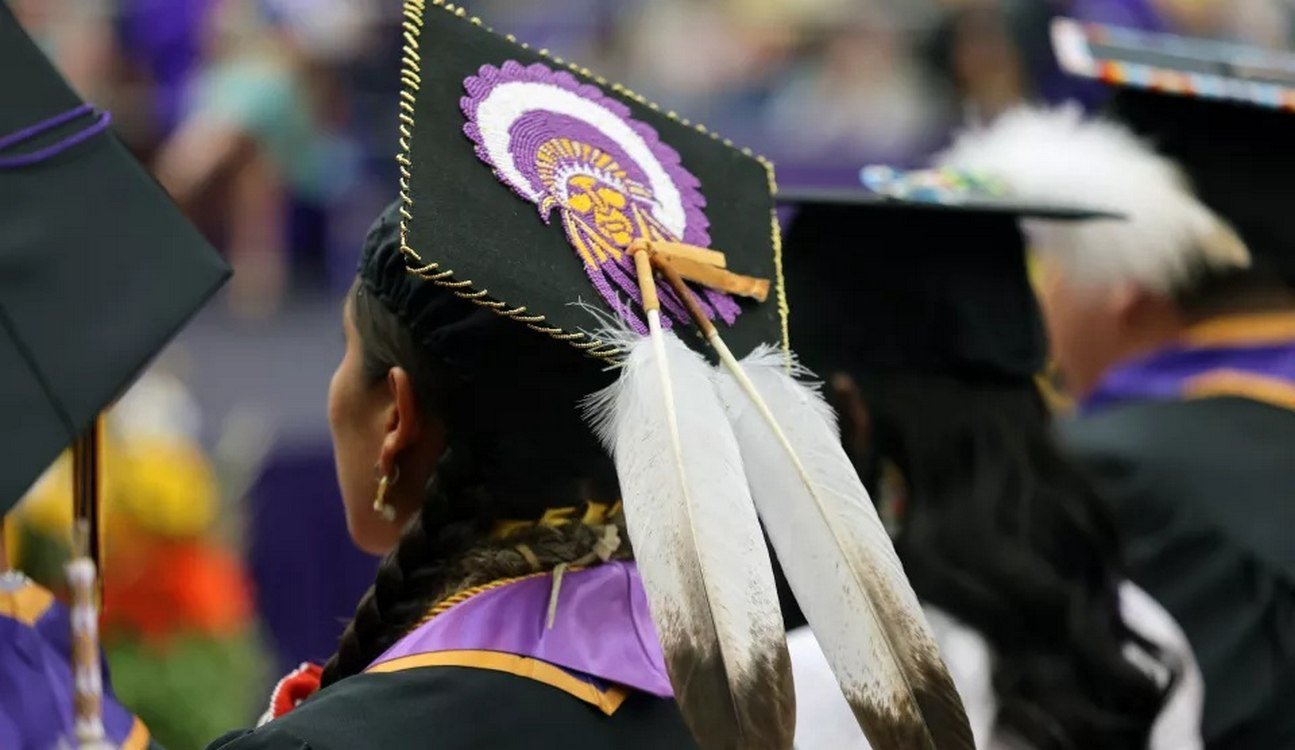
– credit, Bureau of Indian Education
High schools funded and/or managed by the Bureau of Indian Education (BIE) have achieved the highest average graduation rates yet recorded in its history.
8 high schools saw every senior in the 2025/26 class graduate, while another 13 high schools achieved graduation rates of 90% or higher.
It’s no secret that Native American communities often rank as disadvantaged when measuring for things like literacy and education, medical services, life expectancy, and income levels.
The rise in graduation rates, reports AP, reflects a mixture of different approaches and accounting methods that have put the graduation rate of students at BIE managed or funded schools bang on the national average of 87-88%, eliminating that previous disparity.
“These schools are a testament to what is possible when students, families, educators, and tribal communities work together,” said BIE Director Tony Dearman.
“Our students are showing the nation what Native excellence looks like. Their success reflects the unwavering dedication across our school communities to keep students at the center of everything we do, to ensure they graduate, and to thrive afterward.”
In a statement marking the milestone, the BIE claimed that it had modernized its data systems, using technology to provide schools with pacing guides, instructional resources, real-time dashboards, and reporting tools that enable consistent instruction and early identification of student needs.
NATIVE EXCELLENCE:
AP also quoted BIE officials as addressing data—that they would previously count students changing schools as having left school unfinished. Correcting for this, graduation statistics noticeably rose.
Additionally, remote learning: a relic of the pandemic years, remained in place at BIE schools to aid students with more home responsibilities, either as family caregivers or workers, and more opportunities and exposure to the trades helped technically-inclined students stay engaged.
Graduation rates for Native American students languished at 51% in 2015, a marker of how far the system and the myriad of different nations and approaches have come in a relatively short period of time.
CELEBRATE The Bright Futures Of These Native Nations And Their Children…
