


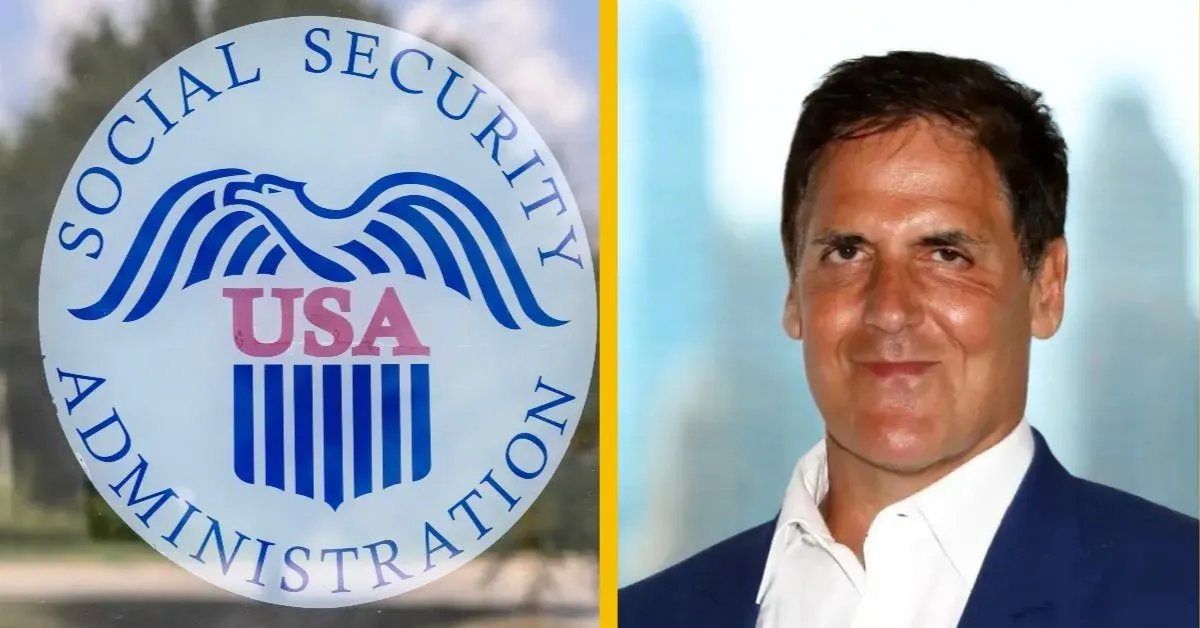
If Social Security is part of your retirement plan, the newest AI debate might feel far from your monthly check. It isn’t.
Mark Cuban has floated an unconventional fix: If artificial intelligence lets companies do more with fewer workers, some AI-driven gains might need to help fund Social Security.
Here’s what Cuban’s idea would try to solve and what it could mean for your future benefit.
Cuban’s AI warning
Cuban’s warning starts with a basic Social Security fact. The program is tied to work. Wages generate payroll taxes that help pay current benefits.
AI complicates that math when employers use it to replace work people used to do. A company could still make money, but payroll taxes tied to those missing wages could shrink or grow more slowly.
That doesn’t mean AI has already broken Social Security. The latest official pressure comes from long-running demographic and funding math, not a confirmed AI shock. The AI concern is narrower: If automation reduces taxable payroll over time, an already difficult funding gap could get harder to close.
Recent layoff tracking suggests AI is already part of some job-cut decisions, though it isn’t the whole labor market story. There were 101,743 U.S. job-cut announcements citing AI from January through June 2026, or about 23% of all cuts tracked according to outplacement firm Challenger, Gray & Christmas.
Shopping for cheaper auto insurance? Enter your zip code here to get started.
The payroll connection
Social Security is funded mainly through payroll taxes. In 2026, workers and employers both pay Social Security taxes on covered wages, and self-employed workers pay both shares. Those taxes apply to earnings up to $184,500 for the year.
That structure matters for Cuban’s idea. When a worker earns a paycheck, Social Security gets a dedicated tax contribution. When software or an AI system does the work instead, there’s no Social Security payroll tax on that task under current rules.
Corporate profits might be taxed in other ways, but those taxes don’t automatically replace the dedicated payroll-tax contribution that Social Security receives from wages. That’s the gap Cuban is pointing at: The economy could still produce value, but the program might not capture the same dedicated revenue if less value shows up as paychecks.
Trustees’ clock
The latest Social Security trustees projections keep the pressure in view. The 2026 Trustees Report projected that the Old-Age and Survivors Insurance trust fund could be depleted in 2032, unless Congress acts.
That doesn’t mean Social Security would disappear. If reserves run down, ongoing payroll tax revenue could still cover about 78% of scheduled benefits, based on the trustees’ projections. The risk is a reduction from promised benefits, not a zero-dollar check.
This part of the problem is established. The trustees’ warning isn’t an AI forecast, and it doesn’t depend on Cuban’s proposal. It’s the current federal estimate of the program’s financing gap; Cuban’s idea is one possible response.
The proposed fix
Cuban’s idea is a shift in Social Security thinking: If automation moves economic gains away from taxable wages, some AI-related activity could be taxed to help replace part of the lost payroll-tax revenue. The version FinanceBuzz described is a federal tax on AI tokens, rather than a traditional payroll tax increase.
The appeal is easy to understand. If AI moves more value away from paychecks and toward profits or computing-driven productivity, a dedicated AI-related tax could try to follow the money and preserve funding without asking workers alone to carry the full burden.
The weakness is real. Defining AI is messy, and companies use software almost everywhere in their business. A too-narrow tax could be easy to avoid. A too-broad tax could hit ordinary technology investments, including tools that help workers do their jobs better.
There is also a competitiveness concern. FinanceBuzz reported that Anduril founder Palmer Luckey has criticized Cuban’s idea, warning that it could create a new burden for U.S. companies and put them at a disadvantage against foreign competitors.
Your benefit risk
Nothing about Cuban’s idea changes your check right now. Social Security benefit rules remain in place, and trust fund projections don’t automatically trigger an immediate cut.
The real risk is timing. If lawmakers wait until the trust fund deadline is much closer, any fix might need to be larger, faster, or more painful. That could mean higher taxes, slower benefit growth, benefit formula changes, or some mix of options.
For you, AI isn’t a separate retirement issue. It could become part of the same Social Security debate that already includes age demographics, wage growth, taxes, and benefit promises.
Political hurdles
A dedicated AI tax would need Congress, and no federal law based exactly on Cuban’s Social Security AI-tax concept has been enacted as of July 27, 2026. This is still an idea, not a rule you need to budget around.
The politics could be difficult. Some lawmakers might like asking powerful companies to help protect retirees. Others might argue it could slow innovation, raise costs, or punish businesses for becoming more productive.
The key question for your check isn’t whether “AI tax” sounds good or bad. It’s whether any proposal would raise enough dedicated revenue for Social Security, protect lower- and middle-income households, and avoid weakening the job market that still funds most of the program.
What to watch
The clearest signal would be a scored proposal from Congress, the White House, the Social Security Administration, or the Congressional Budget Office. A real plan should say who pays, what gets taxed, how much it could raise, and whether the revenue is legally dedicated to Social Security.
Watch for three practical details: the tax base, meaning whether the proposal targets AI tokens, profits, displaced wages, automation equipment, or AI services; the rate; and whether the money goes into Social Security or the general Treasury.
For your own planning, viral ideas matter less than official numbers. Check your Social Security earnings record, keep your retirement estimate current, and build some flexibility into your savings plan if you can.
Bottom line
Cuban’s idea reframes an old Social Security problem. If AI shifts more economic value away from paychecks, lawmakers could face more pressure to look beyond traditional payroll taxes. If you’re wondering how potential Social Security changes could affect benefits for seniors, it’s worth understanding how the program works today and what current proposals could mean for future retirees.
That doesn’t mean an AI tax is around the corner or your check is about to change. But the Social Security debate might increasingly focus on who benefits from automation, and whether those gains should help support the program you might rely on.
The move now is simple: Watch official proposals, not just sound bites. Any serious fix should show the math, name who pays, and explain what it would do for your future benefit.
FAQs
Can AI really affect my future Social Security benefits?
Not directly, at least not today. Your current Social Security benefits are based on existing law, and no AI tax has been enacted. The concern is that if AI reduces the number of workers paying payroll taxes over time, it could make Social Security’s long-term funding challenges more difficult, prompting Congress to consider new funding options.
Why does Social Security depend so heavily on payroll taxes?
Most Social Security funding comes from payroll taxes paid by workers and employers. If fewer wages are earned because certain jobs are automated, the program could receive less dedicated payroll tax revenue, even if companies remain profitable. That’s one reason some experts are exploring alternative funding ideas to keep Social Security from running out.
How much of my Social Security benefit would I still get if the trust fund is depleted?
If the trust fund reserves are depleted and lawmakers do nothing, the program’s ongoing tax revenue would cover roughly 78% of scheduled benefits, based on the latest trustees’ projections. That would mean a reduction from promised benefits, not a zero-dollar check.
Subscribe Today
Unlock the Best Banking Deals and Bonuses
From high-yield savings accounts to cashback checking and sign-up bonuses, we bring you the best banking offers to grow your money smarter.
Author Details
Chris Lewis, CEPF
Chris Lewis has spent his career turning data into answers. As the Head of Research at FinanceBuzz and a Certified Educator in Personal Finance, he oversees the data journalism and media relations teams, digging into the personal finance topics that shape Americans’ lives at every stage, from Social Security and retirement income to 401(k) strategies, jobs, and real estate.
