


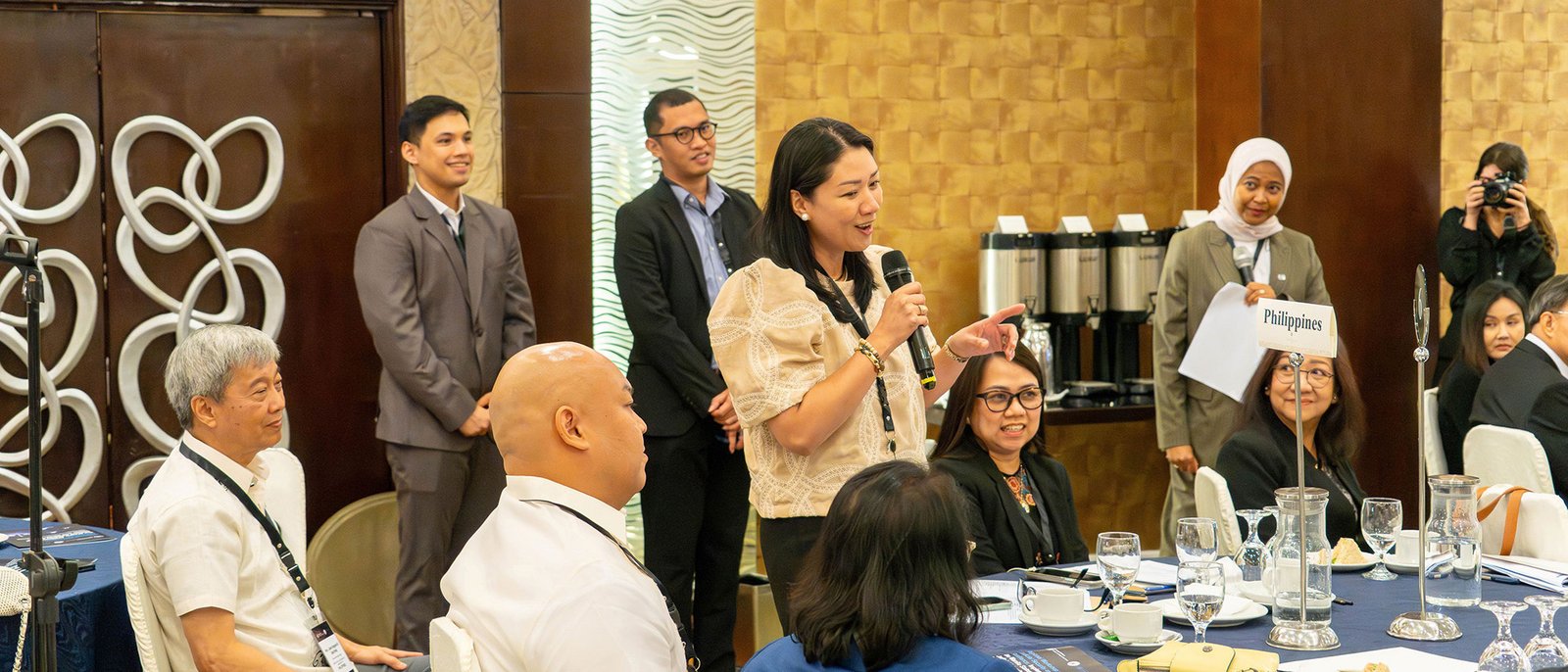
A stakeholder shares perspectives on advancing judicial integrity.
Manilla (Philippines), 25 July 2026 – “These threats affect us both as institutions and as individuals. Insofar as judges are concerned, they [judges] face pressure, intimidation and these ultimately influence —or may affect— their work and their decision-making,” said Jackie Crisologo-Saguisag, Executive Judge in the Philippines
When the judiciary comes under threat, justice itself is at risk. Across the region, judges and judicial institutions are confronting an increasingly complex range of pressures – ranging from intimidation, online harassment, cyberattacks on court systems, overwhelming workloads, political interference, to limited institutional support. These challenges affect not only the well-being of those who administer justice, but also judicial independence and public trust in the courts.
Judicial excellence depends on far more than legal expertise and analytical skills. To deliver fair, impartial and consistent justice, judges and members of the judiciary must also be supported in their physical, mental, emotional and psychological well-being. However, discussions around well-being may remain difficult in many judicial systems. As one respondent observed in UNODC’s global survey on the linkages between judicial well-being and judicial integrity:
“There is a lack of understanding and appreciation of the work that the judiciary does […]. It is hard to communicate with colleagues as they feel the same way, so everyone keeps silent.”
Creating an environment in which judges can perform their duties independently and without fear requires more than individual support – it also requires secure, resilient judicial institutions capable of responding to evolving threats. Recognizing the pressing need to respond to these emerging threats against judicial integrity, Chief Justices and senior members of the judiciary from nine countries in South and South-East Asia adopted the Manila Statement on Judicial Integrity for South and South-East Asia (“Manila Statement”) in November 2025. Adopted at the High-Level Meeting jointly organized by the United Nations Office on Drugs and Crime (UNODC) and the Office of the United Nations High Commissioner for Human Rights (OHCHR), the Statement signals a strong regional commitment to combating corruption, protecting judicial well-being and strengthening cross-border cooperation.
H.E. Ms. Anna Ferry, Ambassador of Sweden to the Philippines delivers opening remarks during the workshop, setting the context for the discussion on threats to judicial integrity and the workshop’s role in implementing the Manila Statement commitments.
Building on this momentum, UNODC and OHCHR, with support from the Government of Sweden convened 65 judges, court officials and judicial practitioners on 7 – 8 May 2026 in Manila, the Philippines, to exchange experiences, strengthen institutional resilience and translate commitments from the Manila Statement into practical action. The workshop provided a platform for participants to examine the threats facing judicial institutions in their respective countries and across the region, share lessons from national responses and identify practical measures to strengthen institutional protection.
Judges and judicial officials from nine countries – Bangladesh, Brunei Darussalam, Lao PDR, India, Indonesia, Maldives, Mongolia, Philippines and Thailand – participated in the workshop. It brought together those who were responsible for translating the regional commitments of the Manila Statement into practice within their respective judiciaries, including officials responsible for institutional security, administration, ethics and integrity.
From left to right: Ms. Putri Rahayu Wijayanti, National Programme Coordinator, UNODC, Hon. Justice Geraldine C. Fiel-Macaraig, Associate Justice, Court of Appeals of the Philippines, Hon. Justice Chaiyos Oranonsiri, Vice President of the Supreme Court of Thailand, Hon. Justice Anil Kshetarpal, Judge, Delhi High Court of India share insights during the panel discussion on political interference and institutional pressures.
Through expert presentations, country case studies and practical working sessions, participants reflected on the challenges confronting their judiciaries, identified opportunities for reform and reaffirmed the collective responsibility to safeguard judicial well-being, protect judicial independence and maintain public confidence in justice systems.
And the outcomes are concrete.
From deepening participants’ understanding of the evolving threat landscape to facilitating peer exchange on both successful responses and lessons learned, the workshop produced tangible results.
To ground discussions in the lived experiences of judges and judicial practitioners, UNODC, OHCHR and the Supreme Court of the Philippines conducted an anonymous pre-workshop survey, receiving 90 responses across the region. Presented as anonymized regional findings, the results offered a candid picture of the evolving challenges facing judiciaries across South and South-East Asia. The survey revealed widespread concern over the increasingly complex threat environment, with respondents highlighting both longstanding and emerging challenges that undermine judicial independence, operational continuity, public confidence and institutional resilience:
During the workshop, participants conducted country level threat and gap assessments, identified institutional vulnerabilities and developed action plans to strengthen safeguards within their judicial systems. The workshop also reinforced regional networks, established mechanisms for continued cooperation and accountability, and laid the groundwork for tracking progress over time. Building on the workshop outcomes, UNODC and OHCHR will develop a regional paper synthesizing insights from the pre-workshop survey and workshop discussions to inform efforts to strengthen judicial security and resilience and support implementation of the Manila Statement.
Voices from the field.
Watch our latest video to hear directly from judges and those working alongside them on why strengthening judicial security and resilience matters for judges, for institutions and for the public they serve.
Learn more about UNODC’s Global Judicial Integrity Network.
