


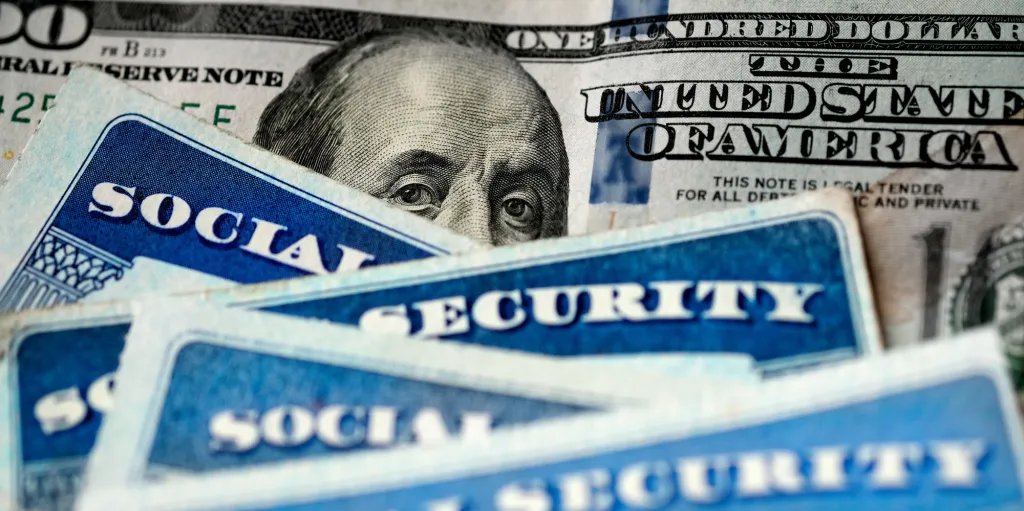
The need to reform Social Security — to keep by far the most important government assistance program solvent — has long been obvious. The Baby Boom from 1946 to 1964 kept the ratio of workers paying Social Security taxes to the number of retirees receiving Social Security benefits at a healthy level for decades. But after birth rates plunged by more than half in the 1970s, the math was plain: Social Security reserves would steadily be depleted when Baby Boomers started turning 65 in 2011, requiring basic changes to keep the benefits that so many rely on from shrinking.
It is a sad commentary on the increasing superficiality of American politics that the presidents from January 1993 to January 2009 — Bill Clinton and George W. Bush — treated this as a bigger issue than successors Barack Obama, Donald Trump and Joe Biden. But the latest and grimmest Social Security Trustees’ Report, issued last month, should change that. Trustees warned that if changes are not made, reserves will be wiped out by late 2032, requiring a 22% cut in benefits for the 70 million-plus older Americans forecast to then be receiving monthly checks.
Given the long stalemate on this issue, it’s easy to assume that this catastrophe will come to pass. Many Republicans and affiliated think tanks still seek partial privatization of Social Security — even though a key to Trump’s political rise in 2016 was his loud disdain for this unpopular approach. Meanwhile, many Democrats and the influential American Association of Retired Persons oppose any changes that go beyond sharply increasing the inflation-adjusted “taxable maximum” of annual wages — $184,500 — subject to the hefty 12.4% Social Security payroll tax.
But the good news is that another hugely influential group — the wealthiest 15% of U.S. households — are surprisingly supportive of a reform in which they would face the biggest new burden. The Reagan National Economic Forum Public Policy Survey, released in May by the Ronald Reagan Presidential Foundation and Institute, found far more support for “means testing” — limiting Social Security benefits for the most affluent retirees — than broad tax increases. The survey showed 71% of Americans support this fix, including strong majorities of Democrats, Republicans and independents — and 60% of households earning more than $200,000 per year.
The most common means testing proposal is setting a formula that steadily reduces benefits based on income or wealth thresholds. There would be huge fights over the details. But number-crunching by the Committee for a Responsible Federal Budget shows the promise of means testing to put Social Security on far more solid ground going forward, averting or limiting the crisis that looms in 2032.
As the survey shows, the most enduring criticism of means testing — that Social Security was deliberately designed as a universal program, not a welfare program, to ensure its durability — simply no longer holds. Most Americans are open to the idea of seeing Social Security as “earned insurance against poverty in old age,” as policy wonk and means-test enthusiast Mickey Kaus wrote last month. It’s time for a bipartisan coalition to act on this fact — and head off disaster.
