


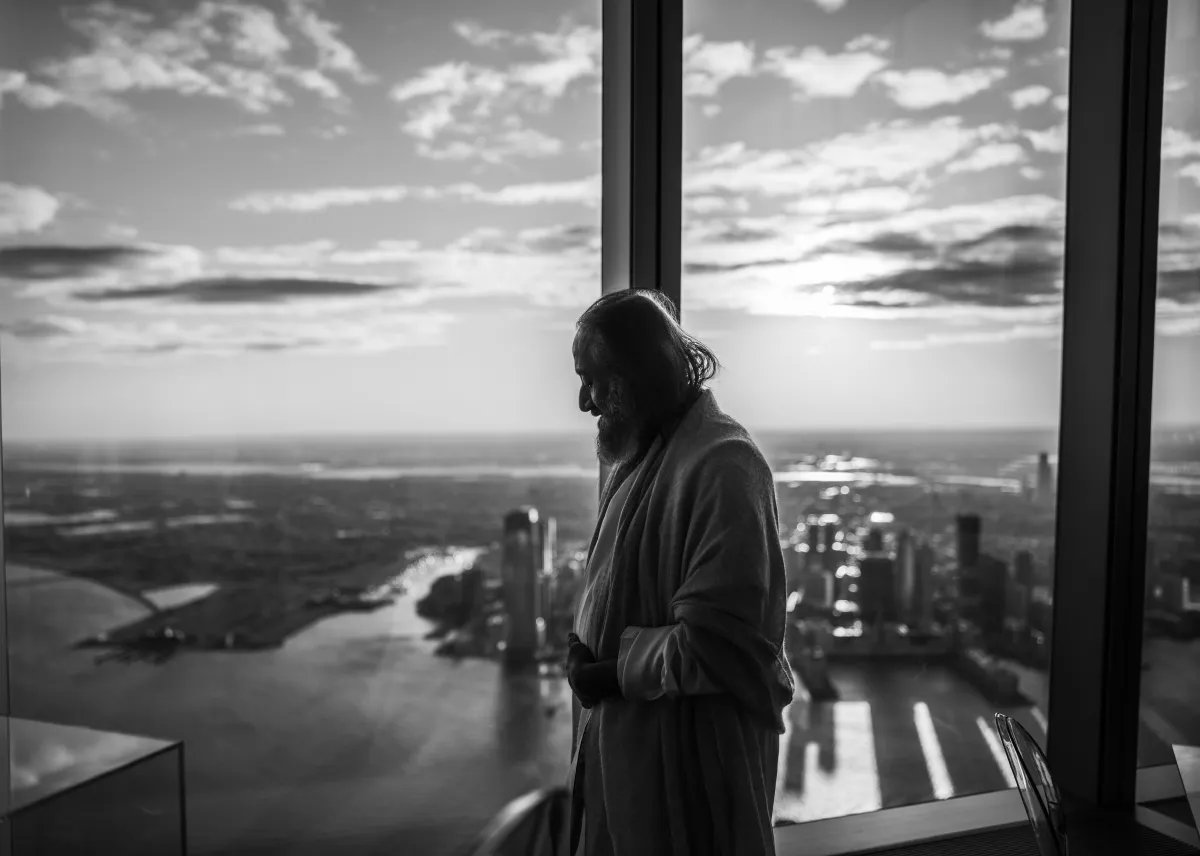
In the age of optimization, executives are expected to process staggering volumes of information, make rapid decisions under pressure, take risks and outsource human judgment to machines.
As a result, modern leadership has never faced more challenges.
The solution for many executives navigating a fast-paced and overstimulating world that prioritizes profits and outputs is to step away from the very screens that supply all this data.
“Meditation and mindfulness bring a calmness and clarity to our daily life which is nowadays peppered with constant and incessant communication and oftentimes false and unnecessary information,” Kuok Group Singapore Limited Chairman Kuok Khoon Ean told Newsweek.
Every leader—from Oprah Winfrey to Google CEO Sundar Pichai, Thrive Global founder and CEO Arianna Huffington, Salesforce CEO Marc Benioff—has spoken publicly about their meditation practices. Mindfulness and meditation have helped them make better decisions, communicate more effectively and encourage more strategic insights and innovative ideas that lead to overall business success.
While the mark of a good leader has typically been measured by how one commands a room, navigates a negotiation or delivers inspiring words, the key to lowering stress and maximizing success may lie in the silence.
“Some people fear silence because they misunderstand it,” Indian spiritual leader Gurudev Sri Sri Ravi Shankar told Newsweek. “Silence is not the absence of activity; it is the absence of inner noise—the constant mental chatter that distorts how we perceive and respond to life.”
Gurudev was a student of Maharishi Mahesh Yogi’s Transcendental Meditation before he founded the Art of Living Foundation in 1981. The nonprofit organization focuses on stress management, mental well-being and promoting peace—both internally and across borders.
Meditation, he said, helps to reduce that inner interference. By settling the mind, perception becomes sharper, allowing people to see situations as they are, rather than through the lens of stress or fear.
“Decisions then arise from clarity and wisdom instead of haste and reaction,” Gurudev added. “Silence does not diminish the mind’s capability, it restores the mind to its full potential.”
Kuok said he practices Gurudev’s Sudarshan Kriya, known as SKY breathing meditation, and credits the technique with helping him and many of his colleagues find the calm, strength and wisdom to lead fulfilling lives.
“It has shown me that with a calm and strong mind, adversity becomes a challenge instead of an obstacle; objection offers a pause to consider alternative options rather than a dead end; listening is more productive than talking; everyone’s opinion has value; leaders are often silent and invisible, you just have to recognize them,” he said.
‘I Could Respond With…Perspective’
At age 70, Gurudev has worked with over a billion people worldwide through his technique, which focuses on rhythmic breathing to align the body and mind in a state of calm.
The SKY Breath Meditation method targets the vagus nerve, known as the calm highway, to regulate the nervous system. By rotating through fast and slow breathing, a cycle of calming is activated that shifts the body from “fight or flight” mode to “rest and digest.” The heart rate is lowered, stress is reduced and emotional regulation is made easier.
“When the mind is free from stress and agitation, perception becomes sharper, communication improves, intuition grows stronger and one connects with people more authentically,” Gurudev said.
There have been over 100 independent studies from academic institutions like Yale, Stanford and Cambridge that show the benefits of SKY Breath Meditation. The research generally found that breath work and meditation helped reduce anxiety, depression, insomnia, the stress hormone cortisol and can even boost social connectedness, compared with a control group. One study also found that it can reduce PTSD in veterans from wars in Iraq and Afghanistan.
Depression rates in the United States have climbed over the past decade—18 percent of adults report they currently have or have been treated for depression in 2025, up from 10.5 percent in 2015, according to Gallup.
This anxiety, in part, can be driven by day-to-day struggles at work. A 2024 study from SHRM found that 35 percent of workers said their job has negatively impacted their mental health, and more than half reported feeling pressure to prioritize their organization over personal well-being.
Businesswoman and Grammy-winning musical artist Chandrika Tandon told Newsweek that stress used to feel like an unavoidable part of life, but that SKY meditation practice helped create balance internally that changed the way she led her global company and her family.
“In high-stakes business situations, instead of reacting from stress or exhaustion, I found I could respond with greater focus, patience and perspective,” she said. “My work became more joyful, meaningful and exciting, and my leadership become more compassionate—not only toward others but toward myself.”
‘No External Achievement Can Replace the Need for Inner Harmony’
When Gurudev started teaching his practice 45 years ago, he said there was prejudice around meditation and that it was not accepted into the mainstream. Images of monks sitting in silent monasteries or the more “woo-woo” aunt bringing crystals and sage to Thanksgiving became the archetype for those who meditate.
But today, wellness is a near-$7 trillion industry globally. And business leaders should take note: much of the workforce is buying into the search for a perfect solution to their mental ails. McKinsey’s 2025 “Future of Wellness” report found that younger generations report higher levels of stress and burnout, with many Gen Z respondents saying they feel “almost always stressed.” But their wellness needs, especially related to mindfulness and mental health, are not being met in the current market.
As younger generations continue to advance up the corporate ladder, they are bringing with them a growing priority on wellness. And they are willing to spend their money on products, memberships, supplements and experiences that will help them reduce stress and achieve their goals.
This includes booking wellness retreats abroad, investing in wellness and meditation apps or seeking therapeutic advice from AI chatbots. But as technology advances endlessly, Gurudev notes that the human nervous system has its natural limits. And the best solution might be simply stepping away from screens.
“No external achievement can replace the need for inner harmony,” he said, adding that meditation, silence, breath work, soothing music and time in nature act as the brakes that “restore balance to the nervous system and clarity to the mind.”
What started as a personal spiritual and wellness practice has now transformed into a way to reframe cognitive infrastructure to promote resilience, clarity and conscious leadership.
His methods helped Professor Myron S. Scholes, who won the 1997 Nobel Prize in Economic Sciences, learn that intuitive and analytical approaches can work side by side. “I have known and enjoyed interacting with Gurudev Sri Sri Ravi Shankar for more than 25 years now, not only learning the breathing and meditation techniques which had helped me become calmer and to broaden my perspectives, but also—through our many public and private discussions—learned that my analytical thinking interacts beautifully with his intuitive and spiritual approaches to problem solving. It is always a pleasure to be with him and to learn with him,” Scholes told Newsweek.
Teaching leaders from Silicon Valley to Geneva how to show up as the best versions of themselves and reframe the path to personal and professional success has been a key part of Gurudev’s mission. “We have taught people how to build companies, manage crises and achieve targets, but very little about how to manage their own mind,” he said. “A car needs both the accelerator and the brake to function properly. Today, most people know only the accelerator—they keep pushing, achieving, deciding and reacting, but without the brake, the system overheats.”
He adds that the benefits of meditation go beyond improvements in general happiness and communication, but can help leaders build personal fortitude when overcoming the inevitable setbacks and missteps.
“It is also important to understand that your identity is greater than any role you hold,” he said. “When you realize you are more than your position or achievements, success does not intoxicate you and failure does not break you. Then you can lead without losing yourself.”
‘Not Simply About Feeling Calmer’
When Sanjay Pradhan, the president of the World Forum for Ethics in Business, was appointed vice president of the World Bank in 2008, he inherited what he described to Newsweek as a “deeply challenged institution” marked by outdated capabilities, declining relevance and resistance to change.
But during this time, he said employing Gurudev’s breathing and meditation practices became a source of unusual clarity, resilience and inner steadiness.
“They helped me remain calm amid intense pressure, make difficult yet humane decisions and lead a major institutional transformation—including a 70 percent renewal of staff skills, the creation of a wholly new innovation and learning platform and a far-reaching modernization effort,” he said.
Pradhan said the World Bank even integrated Gurudev’s tools into a new global leadership program, to help senior leadership around the world strengthen self-mastery, resilience and effectiveness in navigating complex challenges.
“For me, Gurudev’s methods were not simply about feeling calmer; they tangibly enhanced both my effectiveness as a leader and the leadership capacity of others globally,” he said.
Tim Draper, founder and managing partner of Draper Associates, also found the techniques invaluable in managing intense mental demands.
“I was at Draper University and I needed to actively listen to and give feedback to 104 founder pitches in one day. After the first half, I was on edge and growing exhausted from the mental strain. We had a 30-minute lunch break, and rather than having lunch, I did my breathing exercises and Sudarshan Kriya. I came out refreshed and focused, and had no trouble finishing the pitches,” Draper told Newsweek.
“I think about Gurudev almost every day. His clarity, his philosophy, his methods and his patience are inspiring for me to guide me to live a better life.”
As stigmas around mental health diminish over time and wellness practices become more normalized, Gurudev and the Art of Living are continuing to scale their mission globally.
Last December, the foundation partnered with Gallup to announce a new global study to create a dataset on meditation and well-being ahead of World Meditation Day. Gallup will incorporate new meditation questions into the World Poll to compare practices related to emotional and mental health to study the role of meditation in everyday life around the world.
“Despite substantial global investment in well-being and mental health, the world still lacks enough reliable data on how people engage with meditation and how these experiences shape daily life,” Ilana Ron Levey, managing director at Gallup, said in a press release at the time. “This study will give leaders evidence they can use to understand meditation’s role in people’s lives.”
‘Negotiations Fail Because People Do Not Listen’
Beyond the boardroom, Gurudev and the Art of Living are also driven by efforts to reduce conflicts on the global stage. He has addressed the World Economic Forum, the United Nations, U.S. Congress and European Parliament—demonstrating how a clear and focused mind can help improve diplomacy across the aisle.
“In every conflict situation, whether in governments, institutions or personal relationships, people communicate far more through their inner state than through words,” Gurudev said. “Before anything is spoken, anxiety, defensiveness or agitation are already felt in the room, and trust becomes fragile. But when a leader is calm, centered and genuinely committed to the well-
being of all, something changes—people soften, they begin to listen and solutions emerge more naturally.”
On the very first International Yoga Day on June 21, 2015, Gurudev led a short meditation for U.N. Secretary-General Ban Ki-moon and other diplomats. Gurudev recalls that Ban told him that the U.N. needs a meditation before every negotiations so people can calm down and truly listen to each other, adding that “most negotiations fail because people do not listen.”
“Inner emotional regulation is not separate from leadership; it is the foundation of wise leadership, especially in times of crisis,” Gurudev said.
