


14
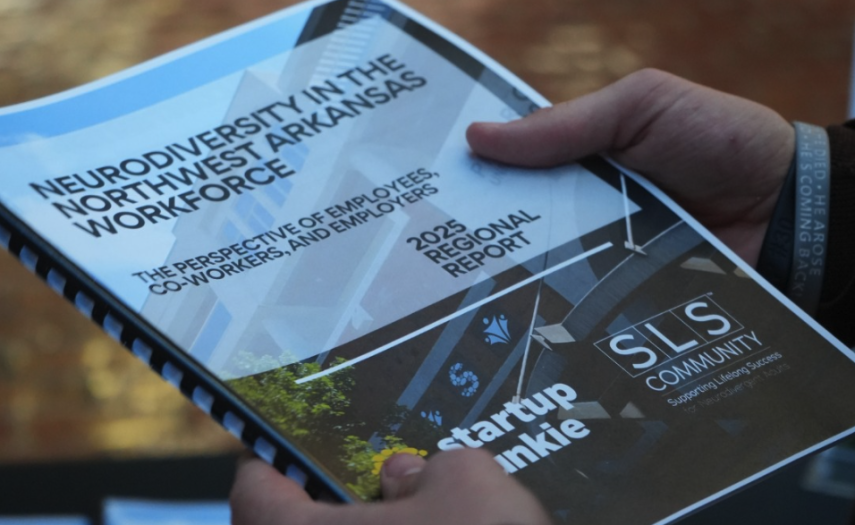
A new study on neurodiversity in northwest Arkansas workplaces has found that while awareness is increasing, formal policies and training remain inconsistent.
Neurodivergence includes conditions such as autism, ADHD, dyslexia, OCD and Tourette’s syndrome that are estimated to affect 15 percent to 20 percent of the U.S. population. The Northwest Arkansas Neurodiversity Workforce Study, led by Fayetteville’s Startup Junkie in collaboration with Fayetteville nonprofit SLS Community, examined how employers, coworkers and neurodivergent professionals perceive workplace systems and support in one of the fastest-growing economic regions in the country.
The study gathered perspectives from organizational leaders, neurotypical employees and neurodivergent employees across multiple industries in northwest Arkansas.
Among the study’s key findings:
- Awareness outpaces implementation.
Many organizations report valuing neurodivergent talent, but formal policies, training and accountability systems remain limited. - Perception gaps exist between leadership and employee experience.
Organizational leaders and neurotypical employees often perceive workplace environments as more supportive than those that neurodivergent employees report experiencing. - Inclusive workplace design improves retention and engagement.
Employees who reported access to tailored workplace adjustments and supportive management demonstrated higher job satisfaction and stronger intent to remain in their roles. - Practical adjustments can produce meaningful results.
Clear communication expectations, predictable task structures, flexible scheduling and sensory-aware work environments were associated with improved productivity and team cohesion.
“Our goal with this study was to move beyond awareness and into action,” said Claudia Porras Scott, director of entrepreneurial access for Startup Junkie Foundation. “What we found is that the challenge is not a lack of talent, but a misalignment in how our workplace systems are designed, from hiring and onboarding to communication and performance expectations. When environments are structured with greater clarity, flexibility and intentionality, we don’t just better support neurodivergent individuals, we unlock stronger teams, more resilient organizations, and a more competitive workforce overall.”
Improving workforce outcomes for neurodivergent professionals does not necessarily require major structural overhauls, the study found. In many cases, refining existing management practices and workplace design can significantly improve clarity, engagement and performance across teams.
“Meaningful work provides more than a paycheck: it provides dignity, purpose, stability and connection,” said Ashton McCombs, executive director of SLS Community. “Employment is one of the most powerful social determinants of health that is upstream of so many other health and quality of life outcomes. Through initiatives like Program Forge, SLS Community is helping neurodivergent adults identify their strengths, build work readiness skills and connect with employers so both employees and businesses can succeed. Northwest Arkansas has the opportunity to become a model for how communities can gain a competitive workforce advantage by fully engaging neurodivergent talent.”
READ ALSO: Clinton School Dean Named to America’s 250 Public Service Champions
