


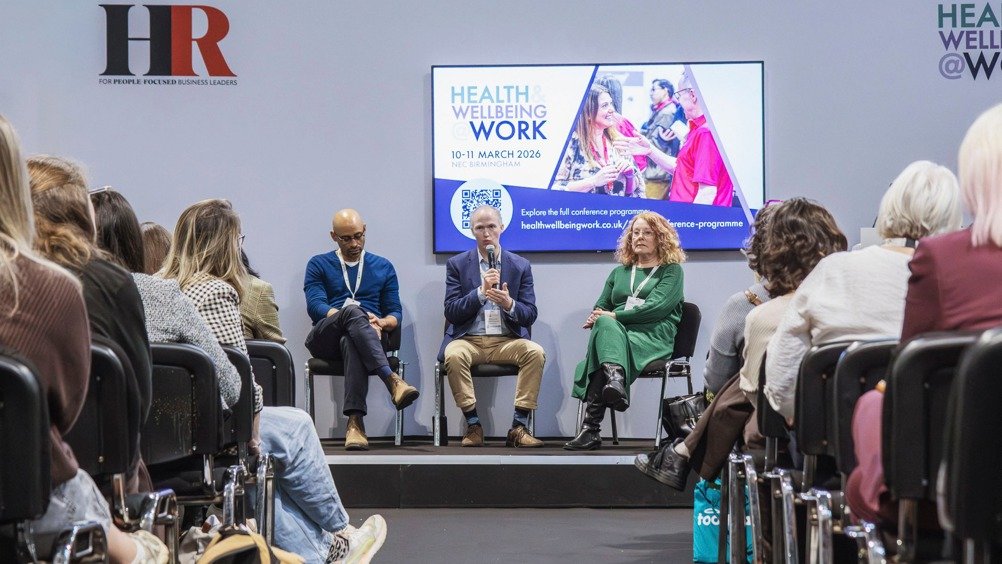
This year’s Health and Wellbeing at Work conference and exhibition opened at Birmingham’s NEC yesterday (10 March). Here’s what we learned on day one.
Autonomous workers value informal flexibility
Contributing to a panel discussion about the future of flexible and hybrid working, author and researcher Gail Kinman underscored the importance of informal flexible work arrangements to workers who value autonomy. “Many people work a self-managing system,” she noted, referencing her research among people working in universities.
“Academics traditionally have high autonomy [over the way in which they work], and they were very resistant to formalising their flexibility. [Leaders and employers] must be mindful of people’s needs,” said Kinman, and do their best to ensure that one group of people’s flexibility preferences don’t negatively impact on another’s.
Read more: Can autonomy fix the motivation crisis?
Tiger de Souza, executive director of people and culture for the Samaritans charity, noted that there is “huge scope” for business leaders to offer workers informal flexibility but warned that it’s unlikely to be possible to “create or build a [flexible working] menu that covers every possibility”. He added: “If a line manager is open to creating an environment where people feel safe to make suggestions [about alternative working patterns], then, as a collective, they may come up with a way of working that’s unique [and would enable them] to perform at their best.”
Nicholas Collins, flexible working lead for NHS England explained that in his context, the NHS tends to focus on trialling different work arrangements, even informal flexible arrangements. The kinds of flexibility that NHS staff enjoy include e-rostering for frontline workers and seasonal work patterns that allow doctors to work remotely during the Antarctic summer of the year, as well as full-time over autumn and winter in the UK at A&E.
Data-led HR requires going back to basics: listen better
“We don’t need more data. We need to listen [better],” argued David Liddle, CEO of the TCM Group consultancy, in the opening keynote of HR magazine’s seminar programme.
Leaders within the people and culture function of organisations (HR) need to be evidence-based and data-driven, but “not because of more surveys, polls and pulse tests, because [they’re] listening, connecting and engaging with people,” said Liddle. Purpose and values should serve a golden thread running through organisations’ people experience, he added, prompting a “shift from a legacy HR model to a positive people and culture model”.
Read more: HR data: What to measure and how to measure it
Liddle encouraged employers to invest in upskilling line managers so that they have the courage to have difficult conversations, to give honest feedback in the moment, and to listen to difficult feedback themselves. “Give managers the skills they need today,” he urged, “[because] they need them right now. They don’t need it in April, they need the skills today, to tackle the challenges happening in our workplaces today.”
Liddle presented an AI-enhanced explainer video about how people professionals can use AI to create better workplaces. He also offered attendees a range of resources to help HR leaders enhance cultural transformation and employee experience, including his free resolution framework and his free AI-enabled Culture Doctor tool, in which leaders can input questions related to workplace culture.
Count the human cost of restructuring
Fractional chief people officer Nebel Crowhurst recommended a tailored approach to addressing the human impacts of organisational restructures. “The real work starts after the announcement,” Crowhurst said. “Silence is where distrust grows,” she noted, emphasising that it’s acceptable to say that you don’t know the answer.
Key challenges for organisations experiencing change include shaken trust, unclear roles, overwhelmed managers and “survivor guilt” among those who remain. Crowhurst emphasised ways to support three groups: those who leave the organisation (leavers), those who lead the organisation (leaders) and those who remain within the organisation outside of the C suite (survivors). Offer compassionate, tailored outplacement for leavers, Crowhurst suggested, and rebuild clarity and connection for those who are staying.
Read more: All change: How HR can manage top table transitions
Setting out a framework called Reset, Crowhurst outlined her suggested approach to restructuring process: Reassure with clarity, enable leaders, stabilise the system, engage survivors, and turn toward the future. Visible leadership, honest communication, manager‑only forums, realistic workload alignment and consistent behaviours are all essential to steering an organisation through change, she stated.
Silence is a sign
When evaluating your organisation’s people data, don’t dismiss a lack of response, said organisational psychologist Balissa Greene, speaking to a packed audience during her keynote about how to improve wellbeing for underrepresented groups. “When we ask for information, when we try to evaluate something, and we get nothing back, that in itself is data,” she explained. “We have to be conscious of that.”
Greene also highlighted ‘the paradox of visibility’: in which people from underrepresented groups are exposed to increased scrutiny because they’re more visible, despite being underrepresented. When people are “visible, but kind of invisible,” what impact does that have on their psychological safety, wellbeing and performance? Greene questioned, urging employers to get and stay curious about this.
Concluding her talk, Greene referenced a recent employment tribunal that was reported in the national press, and noted that understanding difference “is at the heart of inclusive wellbeing for underrepresented groups”. She continued: “When we get that right, when we’re curious, when we explore lived experience, when we use that to design systems, what we’re doing is making sure that we’re getting wellbeing right for everyone.”
Commit and collaborate to prevent workplace health problems
Addressing attendees from the Future of Work stage, Mike Calcutt, deputy director at the Health and Safety Executive, stressed that a preventive healthcare approach only works when leaders show “real commitment, not lip service”. Worker participation is essential, he added, as many of the most effective solutions “come from the workers themselves”.
He highlighted that 1.9 million workers experience work‑related ill health, costing the economy £26.4bn. Half of the problem stems from work‑related stress, and a quarter from musculoskeletal issues, Calcutt explained, before urging employers to turn commitment into action.
Prevention “must be a leadership priority”, he stated, but this only becomes real when leaders “step up and do what needs to be done”.
Calcutt’s final advice was simple: “Pick one problem and do it well.” If you can do, for example, noise-related health issues well, “it will teach you how to do everything else.”
