


The recent trend around “well-being” is truly amazing. The term is broadcast on TV, used as a concept for commercial facilities, and featured as a topic like this—it is truly spreading as a buzzword.
I am a health and fitness exercise trainer, and well-being was one of the very first terms I was taught, learned as part of the World Health Organization’s (WHO) definition of health.
There, it is translated as a “state of complete physical, mental, and social well-being,” used in a sense that encompasses physical, mental, and social aspects.
My interpretation of well-being had remained just as I learned it back then, but recently, I feel it has expanded into a much broader meaning that considers the very ways we live and work.
Of course, being discussed here is likely part of that growing momentum.
I think that is a very good thing, and that is precisely why I am writing this, but
while discussing “what well-being is” is fine and well,
I feel it might also be time to enter a phase of asking, “what kind of well-being are we talking about?”
Of course, there are scholars and experts who define its meaning, but there is something somewhat vague and elusive about the word “well-being.”
I don’t deny that, and I actually think that very vagueness is one of the things that allows us to discuss it together like this.
So, it is about time we talked about what kind of well-being we mean.
That’s one proposal from me (laughs).
As the one bringing it up, I’ll propose “Nature Well-Being.”
I’d like to share a bit of my own experience.
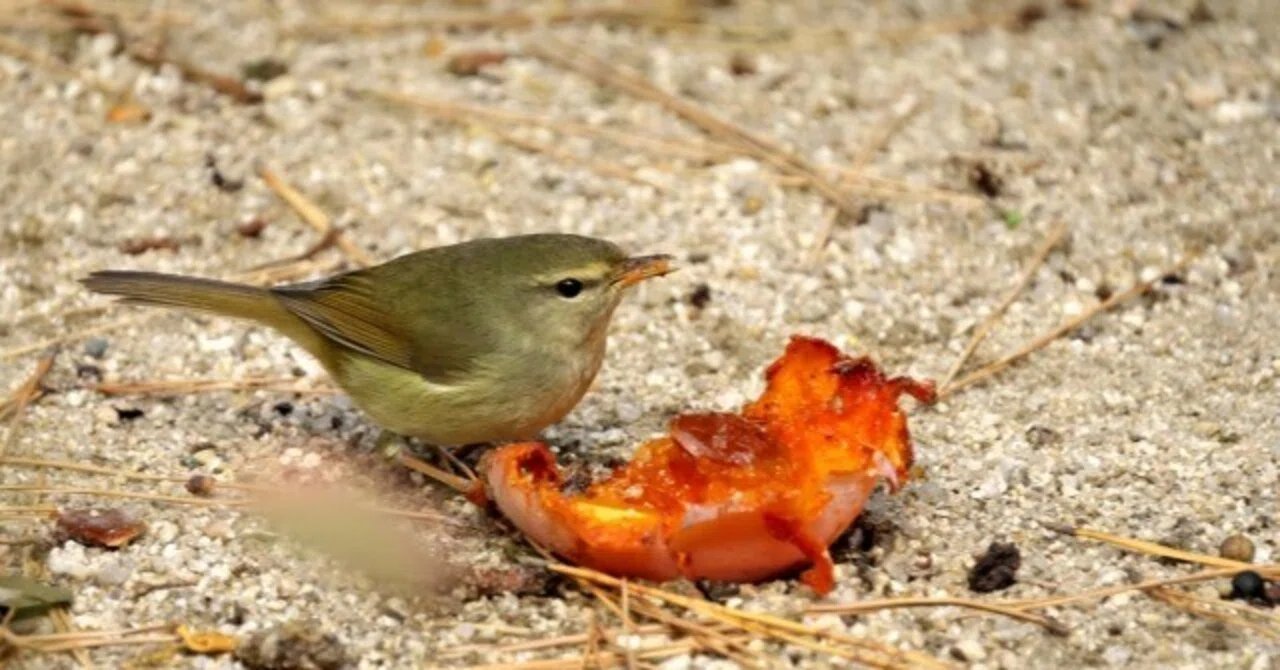
A Winter Bush Warbler
This happened on a recent day off when I went into Tokyo.
I love finding nature in the city, and whenever I see remnants of nature left in urban areas, I can’t help but observe them or peek inside.
As I was walking toward my destination, there was a patch of bamboo grove left along the road, and from within came the bird call “chak, chak.”
Curious, I stopped and peeked into the bamboo grove, and saw a bird about the size of a sparrow hopping away.
Wait… A Japanese bush warbler?
In terms of appearance, it looked like a Japanese bush warbler no matter how you sliced it.
When I looked up its call on YouTube, sure enough, it seemed to be a Japanese bush warbler.
When people think of the Japanese bush warbler, I imagine most picture its springtime “ho-hokekyo” song, but in winter, it makes a “ja, ja” call.
This is known as a call note, or jinaki (地鳴き), and in the case of the Japanese bush warbler, it is also referred to as sasanaki (笹鳴き, “bamboo grass call”).
From autumn through winter, Japanese bush warblers often spend time close to the ground, apparently eating fallen persimmons and insects on the ground.
Huh, so that’s how Japanese bush warblers live in the winter!
That day, I had gone out for another purpose, but along the way, I unexpectedly had the time to savor a small piece of nature in the city.
It’s not as if I spotted a rare bird, nor is it anything to brag about (haha).
It was such a quiet, minor experience that I wouldn’t have written about it if not for this prompt.
Even so, whenever I hear that call—which I might have casually overlooked before—I’m sure that from now on I’ll realize, “Ah! There’s a Japanese bush warbler in this bamboo grove!!”
Noticing the nature I would have passed right by if I had only focused on reaching my destination, and connecting with it.
While there are many forms of well-being, I would like to call this rich awareness unique to nature “Nature Well-Being.”
Stepping away just a little from a goal-oriented mindset to savor the now, to feel the present.
Spending time like that was truly nice.
