


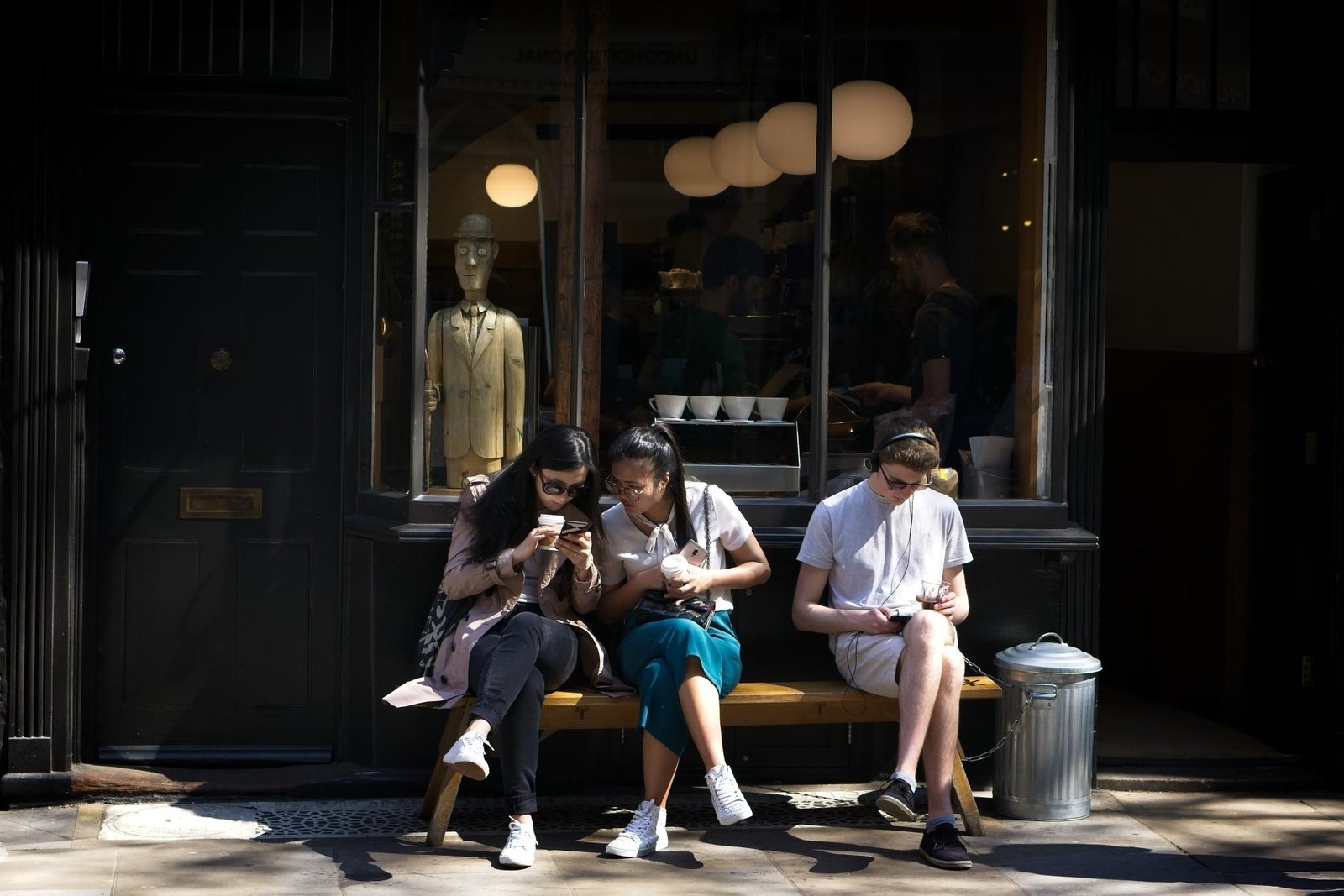
We are now living in an era where hype connectivity dominates every aspect of student life.
I am acutely aware that this very hyper-connectivity has supplanted genuine communication, eroding our relationships, our emotional well-being and our capacity to connect in a truly meaningful way.
The reality is that, while we have never before possessed so many diverse means of communication, paradoxically, we have never felt so alone.
Various studies conducted recently demonstrate that excessive mobile phone use is directly linked to heightened levels of anxiety, social isolation and difficulties in maintaining deep, meaningful relationships.
Research conducted by Taylor and Francis in 2025 revealed that young adults check their phones approximately 150 times a day, spending around five hours daily glued to their screens.
These statistics point to more than just a habit; they reveal a dependency that fundamentally shapes the way we think, socialize and nurture our relationships. The reality is that technology enables us to be “connected,” yet the very definition of this “connection” has become superficial and illusory.
The scientific community is also growing increasingly concerned about this unfolding phenomenon a reality that impacts us all.
A study published in Current Psychology, based on a sample of 14,726 students, demonstrated that increased social media usage correlates with higher levels of anxiety, depression and loneliness, particularly when individuals are exposed to content that is psychologically damaging or when they experience regret over their own posts.
Academic performance suffers as well; as phone usage escalates, academic achievement plummets dramatically, as the mind becomes fixated on social media and digital entertainment rather than on scholarly pursuits.
Hyper connectivity affects not only our ability to concentrate but also our emotional state.
Why should we be concerned? We should be concerned because this profound sense of disconnection we are currently experiencing is actively reshaping the emotional well-being of an entire generation.
A vast number of students live glued to their mobile phones, yet they feel increasingly alone.
The loneliness a student feels is a double-edged sword, impacting friendships, romantic relationships, self-esteem and mental well-being.
Most strikingly, many students fail to recognize this until it is already too late.
Furthermore, hyper connectivity is causing the erosion of many essential skills, such as active listening and empathy.
It is vital that we take action to reconnect with one another; we must strive to minimize multitasking when someone is speaking to us, as doing otherwise signals disrespect.
Conversely, by giving our full attention, we demonstrate respect and reclaim our sense of presence.
We must work toward creating screen-free spaces and organizing face-to-face gatherings to transform the quality of our relationships.
In reality, hyper-connectivity is an issue present in everyone’s life one that will not vanish overnight.
However, we can put a stop to it. We can choose to engage in alternative activities, such as making eye contact, listening attentively and building relationships that do not depend solely on an internet signal.
Once we learn to set our devices aside, we will truly experience what genuine connection feels like.
Story continues below advertisement
