


As Americans increasingly report feeling overwhelmed by daily life, many are using self-care to cope. Conversations and social media feeds are saturated with the language of “me time,” burnout, boundaries, and nervous system regulation.
To meet this demand, the wellness industry has grown into a multi-trillion-dollar global market. A myriad of providers offer products, services, and lifestyle prescriptions that promise calm, balance, and restoration.
Paradoxically, though, even as interest in self-care continues to grow, Americans’ mental health is getting worse.
I am a professor of public health who studies health behaviors and the gap between intentions and outcomes. I became interested in this self-care paradox recently, after I suffered from a concussion. I was prescribed two months of strictly screen-free cognitive rest — no television, email, Zooming, social media, streaming, or texting.
The benefits were almost immediate, and they surprised me. I slept better, had a longer attention span, and had a newfound sense of mental quiet.
These effects reflected a well-established principle in neuroscience: When cognitive and emotional stimuli decrease, the brain’s regulatory systems can recover from overload and chronic stress.
Obviously, most people can’t go 100% screen-free for days, much less months, but the underlying principle offers a powerful lesson for practicing effective self-care.
Table: The Conversation, CC BY-ND Source: National Alliance on Mental Illness/IPSOS
A nation under strain
Americans’ self-rated mental health is now at the lowest point since Gallup started tracking this issue in 2001. National surveys consistently detect high levels of stress and emotional strain.
Roughly one-third of U.S. adults report feeling overwhelmed most days. Sleep disruption, anxiety, poor concentration, and emotional exhaustion are widespread, particularly among young adults and women.
Chronic disease patterns mirror this strain. When daily stress becomes chronic, it can trigger biological changes that increase the risk of long-term conditions like heart disease and diabetes. The Centers for Disease Control and Prevention reports that 6 in 10 U.S. adults live with at least one chronic condition, and 4 in 10 live with multiple chronic conditions.
How people try to cope
Many Americans say they actively practice self-care in everyday life. For example, they describe taking mental health days, protecting personal time, setting boundaries around work, and prioritizing rest and leisure.
The problem lies in how they use that leisure time.
Over the past 22 years, the U.S. Bureau of Labor Statistics’ American Time Use Survey has consistently found that watching television is the most popular leisure activity for U.S. adults. Americans spend far more time watching TV than exercising, spending time with friends, or practicing reflection through activities like yoga. Other common self-care activities include watching movies and gaming.
Modern leisure time increasingly includes smartphone use. Surveys suggest that mobile phones have become the dominant screen for many Americans, with adults spending several hours per day on their phones.
For many adults, checking social media or watching short videos has become a default relaxation behavior layered on top of traditional screen use. This practice is often referred to as second screening.
Although many people turn to screen-based activities to wind down, these activities may have the opposite effect biologically.
Chart: The Conversation, CC BY-ND Source: Bureau of Labor Statistics, U.S. Department of Labor
Why modern screen use feels different
Pre-internet forms of leisure often involved activities such as watching scheduled television programs, listening to radio broadcasts, or reading books and magazines. For all of these pastimes, the content followed a predictable sequence with natural stopping points.
Today’s digital media environment looks very different. People routinely engage with multiple screens at once, respond to frequent notifications, and switch rapidly between several streams of content. These environments continuously require users to split their attention, engage their emotions, and make decisions.
This type of mental multitasking draws on the same neural systems people are often attempting to rest with leisure. The result is a far more fragmented and cognitively demanding environment than in the past.
Americans now spend approximately six to seven hours per day on screens across multiple devices. Splitting attention between more than one screen at a time, such as using the phone while watching television, is common. This juggling exposes people’s brains to multiple streams of sensory and emotional input simultaneously.
Survey data also suggests that Americans may check their phones roughly 200 times per day. In doing so, they repeatedly pull their attention back to screens during routine moments.
Modern digital platforms are designed to maximize engagement. Algorithms tend to prioritize emotionally arousing content, particularly anger, anxiety, and outrage. These feelings drive clicks, sharing, and time spent on platforms. Research has shown that this design is associated with higher stress, distraction, and cognitive load.
When ‘rest’ doesn’t restore
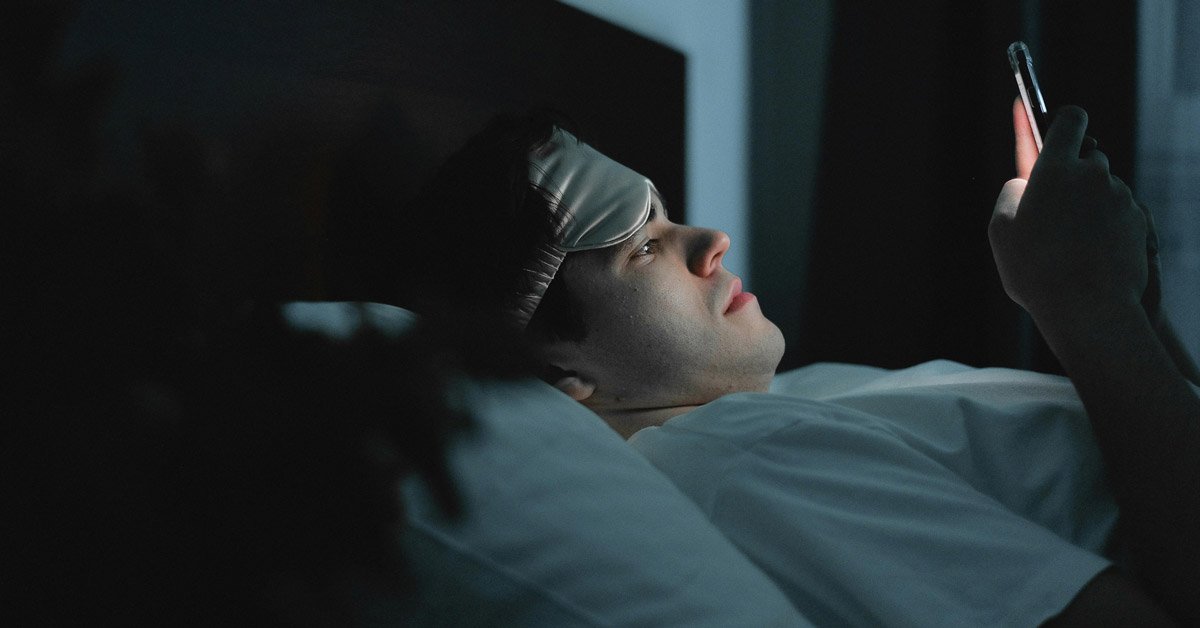
Against the backdrop of daily hassles and competing demands, it can feel like relief to flip on the TV. Practices such as streaming or so-called bed-rotting — spending extended periods in bed while scrolling — often are framed as a form of radical rest or self-care.
Other common coping behaviors include leaving the television on as background noise, scrolling between tasks throughout the day, or using phones during meals and conversations. These strategies can feel restful because they temporarily reduce external demands and decision-making.
However, pairing rest with screen use may undermine the very restoration that people are seeking. Digital media stimulate attention, emotion, and sensory processing. Even while people are sitting or lying still, being on-screen can keep their nervous systems in a heightened state of arousal. It may look like downtime, but it doesn’t create the biological conditions for restoration.
How to wind down
Evidence suggests that mental relief comes not from adding new coping strategies, but from reducing the number of demands placed on the brain.
Here are some evidence-based strategies that support genuine restoration:
The goal is to intentionally reduce mental load, not to abandon all digital devices.
To improve well-being in our overstimulated society, it’s important to understand the difference between feeling as though you are unwinding and actually allowing your brain and body to recover.
In my view, fewer screens, fewer inputs, fewer emotional demands, and more protected time for genuine cognitive rest are important components of an effective wellness strategy.
This article was written by Robin Pickering from Gonzaga University and was originally published on The Conversation.
Header Image by SHVETS production via Pexels
