


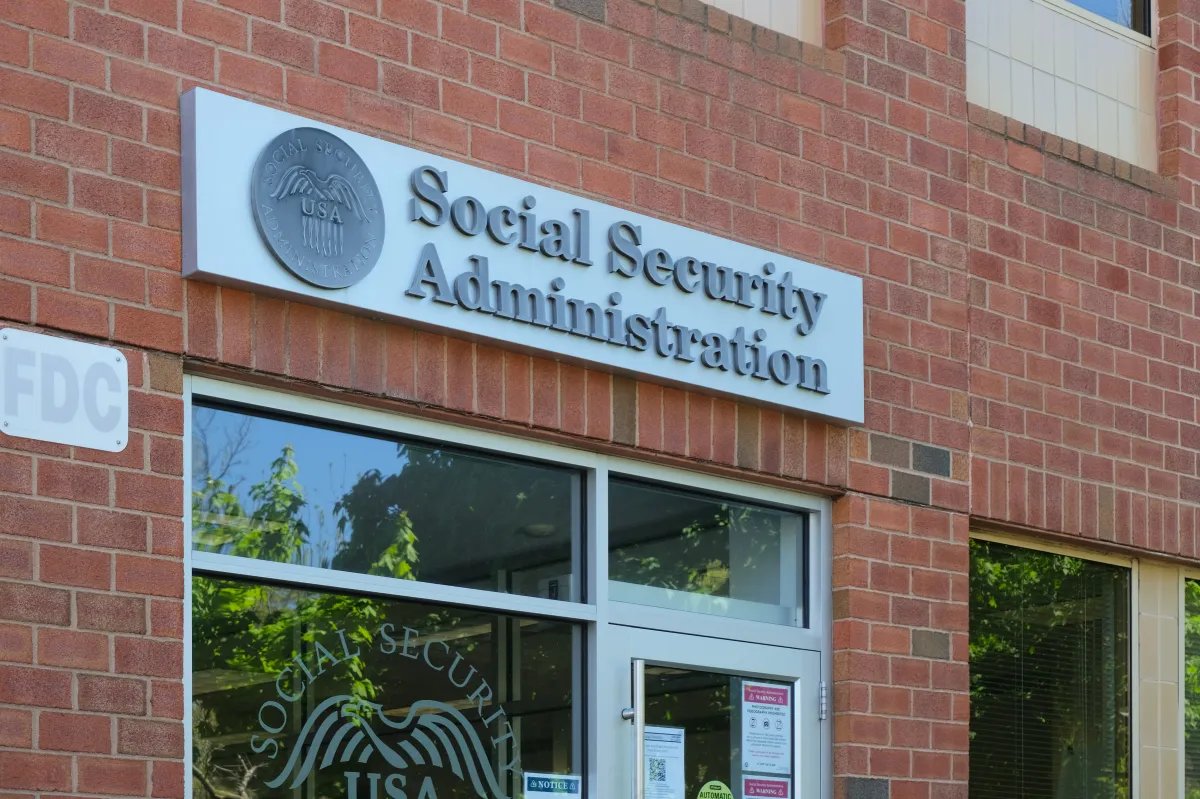
Some Social Security recipients will be getting much smaller payments in 2026 due to a specific type of Medicare premium hike.
Around six million seniors owe Irmaa Medicare premiums, and those are set to increase this year.
Why It Matters
Every year, seniors who receive Social Security see their payments rise according to the cost-of-living adjustment.
While the COLA was set at 2.8 percent for 2026, an uptick in IRMAA Medicare premiums could reverse the boost in payments or even bring them lower than they were before.
What To Know
From 2026 to 2030, Medicare Part B IRMAA premiums are slated to rise 30 percent, according to the 2025 Medicare Trustees Report.
Since Congress decided higher earners should be responsible for more of Medicare’s costs, some recipients will see surges of Part B and Part D IRMAA costs of around 50 percent. That’s on top of basic premiums also increasing.
“Before all Social Security beneficiaries grow anxious this applies to them, it’s important to understand IRMAA usually only impacts higher income earners,” Alex Beene, a financial literacy instructor for the University of Tennessee at Martin, told Newsweek. “The added charge for Medicare Part B and Part D applies to those individuals based on tax information provided from two years prior, and the amount of the adjustment depends on how much money the beneficiary earned.”
IRMAA will hit about 7 percent of Medicare beneficiaries, according to Michael Ryan, a finance expert and the founder of MichaelRyanMoney.com.
Those with income over $109,000 for single Americans or $218,000 for married Americans, based on 2024 tax returns, will be impacted.
“Here’s the shock: It’s deducted directly from your Social Security check. So you retire expecting one payment amount, then suddenly you’re getting hundreds less per month. Many retirees call it being ‘blindsided,'” Ryan said.
“Why it’s lowering benefits? Part B premiums already come out of Social Security automatically. IRMAA is a surcharge on top of that. In 2026, standard Part B is $202.90/month. But if you hit the first IRMAA tier, you pay an extra $81.20/month. At the highest bracket, you’re paying an additional $446.30/month. Per person!”
Ryan said Americans can contest the Irmaa penalty using Form SSA-44 if they had a life-changing event. Retirement, divorce, death of a spouse, or even loss of an income-producing property can qualify.
What People Are Saying
Alex Beene, a financial literacy instructor for the University of Tennessee at Martin, told Newsweek: “The unfortunate aspect is that additional charge eats away at the monthly benefit some will receive, and especially for beneficiaries that live in areas with a higher cost-of-living, those additional charges can add up. If your income has dropped considerably since the tax year two years ago, it’s important to reach out and report that change, as that can help with assistance.”
Kevin Thompson, the CEO of 9i Capital Group and the host of the 9innings podcast, told Newsweek: “Even with a 2.8 percent COLA, many retirees won’t actually feel that increase. Rising Medicare premiums and higher deductibles will eat into it which may be cutting the bump by a full percentage point.
“The ones hit hardest are the middle to lower-middle income brackets, people living on roughly $2,000 a month from Social Security. A $202.90 Medicare premium might not seem like much on paper, but if your monthly check is $1,500, that’s a real hit compared to someone receiving $3,000.”
Michael Ryan, a finance expert and the founder of MichaelRyanMoney.com, told Newsweek: “Most retirees don’t discover IRMAA exists until they get the letter. By then, the income that triggered it happened two years ago. This is why retirement income planning matters more than accumulation planning—but most people figure that out too late.”
What Happens Next
The effects of the Medicare Part B premium uptick could be compounding in nature over several years, experts say.
“Long term, this is less about one bad year and more about a slow squeeze,” Ryan told Newsweek previously. “When health‑care costs rise 3 or 4 times faster than your COLA, every ‘raise’ starts to feel like a cut in disguise. The real risk is that Medicare premiums become a stealth means‑test on Social Security, gradually diverting more of each year’s increase away from groceries and toward medical bills.”
