


Tej Pillai, 55, spent the last seven years making the 24-hour journey from Seattle to India every four months to help care for her aging parents.
Each time she traveled she’d stay with her parents for about a month, caring for them during the day, working east coast hours from 6 p.m. to 3 a.m. and sleeping for just an hour or two in between.
Looking back, she doesn’t know how she did it. But at the time, it felt like her only choice.
Her husband and two daughters, who were in high school and transitioning into college, stayed behind.
“I missed some of their birthdays. I missed a few things. But, you know, what do you do? They were like, ‘It’s OK. Granny and grandpa need you,'” Pillai said, adding that her husband has been super supportive “through all this.”
Nearly 1 in 4 American adults are in the sandwich generation, caring for aging parents and their children at the same time, according to a Pew Research Center survey. For many, the added stress of long-distance caregiving can lead to feelings of guilt and other mental health impacts. For immigrant sandwich generation caregivers like Pillai, tending to both parents and kids at once − when an ocean separates them − can feel physically impossible.
More: Older Americans want to age at home. Their kids are suffering to help them
Mentally, Pillai said, she felt like she was in India more than she was at home.
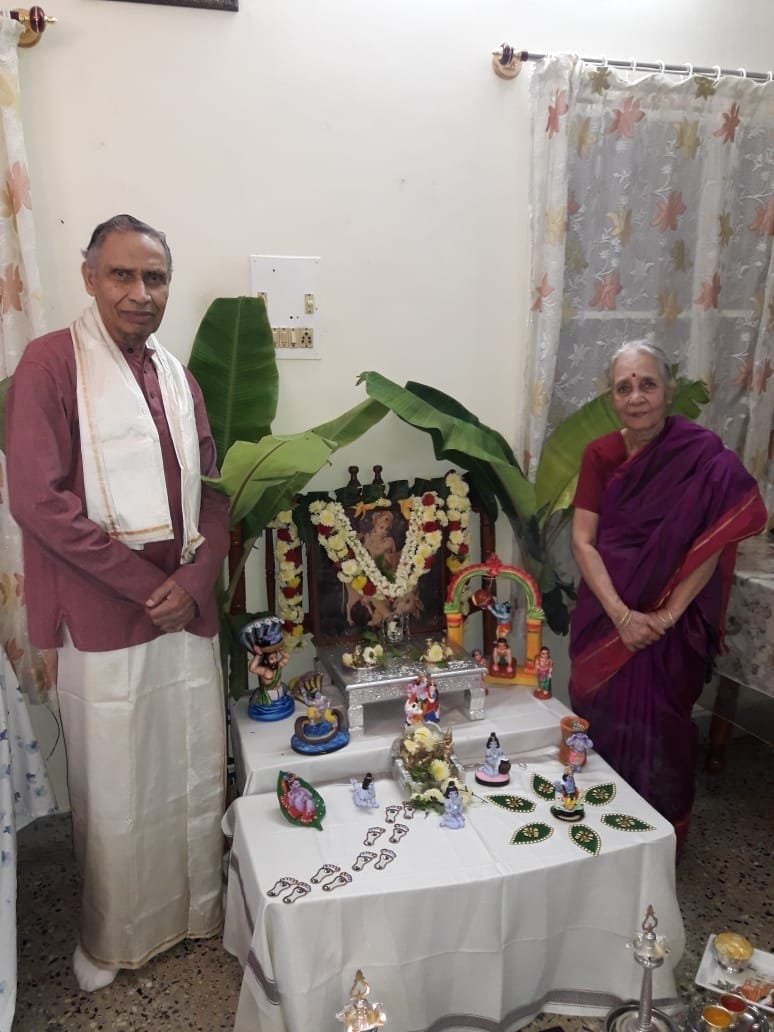
Tej Pillai cared for her parents, Dr. T. A Ramanujachar and Leela Ramanujachar, who live in India, while living in Seattle with her own family. She flew to India every four months over the span of seven years.
“I feel now that maybe I didn’t give my full attention to my two girls, because I feel like I was worried for my parents,” she said.
Sandwich generation caregivers are burned out, said Dr. Madhavi Vemireddy, CEO of Cleo, a global family care platform. And when workers’ parents live in countries without many health resources or supports for the aging population, it can be even more stressful − and costly. Most of the time, Vemireddy said, there aren’t many worker benefits that can help these caregivers, outside of taking a leave of absence.
“So many times, these families are just doing it alone,” Vemireddy said.
Pillai said she and her sister tried to get their parents to move to the U.S. at one point, but it didn’t stick. Her mom wanted to be in her own kitchen again, and her dad wanted to live near his friends. They moved back to India after a few months.
When she was home in Seattle, Pillai said she called her parents several times a day and coordinated their care and medications through WhatsApp chats with cousins, paid caregivers and doctors.
“It was a very busy time,” she said. Her mother died in July, and her father declined quickly afterward. He died in September.
Cultural differences leave some caregivers feeling shame
Pillai has two cousins in India who helped out as her parents aged. But in recent years, their care needs became too great. Pillai and her sister decided they needed to come home and care for their parents themselves.
In America, it’s common for adult children to find a senior living facility or nursing home for their aging parents. But cultural differences in how people care for seniors can make that transition more complicated for American immigrants and their families.
More: Her dad doesn’t speak English. Without the right care help, she can’t get a break.
Sushil Emerick’s mother was diagnosed with dementia in 2019, after years of memory decline. Emerick, who lives near her parents in Florida, worked with her dad to help care for her mother, but they quickly realized they couldn’t meet her care needs on their own. They hired private caregivers to help, but Emerick’s mother continued to struggle.
Sushil Emerick helped care for her mother for several years. Her mother died in 2023.
“It was getting to the point of either 24/7 care at home, which is prohibitively expensive. It’s very expensive, people don’t realize how much that can be. And on top of that, it’s really disruptive to the household,” Emerick said. Their other option was moving her mom into a care facility. “The decision for us came down to two things, really: safety for my mom, and mental health for all of us.”
They moved her into a memory care facility a couple of days after Thanksgiving in 2020.
It was a difficult decision, Emerick said, and even harder to explain it to their family members who live all across the world.
“In my experience, there aren’t a lot of people from our culture who do this. You know, the expectation is family takes care of family, and you keep people at home,” Emerick said. “You don’t see a lot of South Asian people in memory care units, or in facilities in general.”
Emerick said she and her father “got some heat” from their distant relatives, who assumed Emerick wasn’t as involved in her mother’s care once they moved her into the facility. But Emerick said she found caring for her mom in a facility was just as emotionally taxing as caring for her at home.
She visited her mother four to five times a week and said it was like “maintaining an extra household” as she dealt with care staff members and making sure her mother took her medications and ate her meals. “Just because you move a loved one to a community or facility, your work doesn’t stop,” Emerick said.
Pillai said she looked at care facilities in India for her parents, but they, too, were expensive and didn’t fit her parents’ needs. Plus, she felt a responsibility to be there with her parents, in their home, at the end of their lives.
Tej Pillai’s parents, Dr. T. A Ramanujachar and Leela Ramanujachar. Both of her parents died in 2025.
“I was like, it’s my turn now,” she said.
‘I don’t think I should have felt guilty, right?’
For caregivers who can’t take a break from work − or work remotely while abroad − Cleo is working on a solution.
The global care company recently expanded its care guide program to 19 countries including India, South Korea, Malaysia and Thailand. These care guides can help family caregivers make hyperlocal care plans for their families abroad, as an employee benefit.
Arpitha Shankar, a Cleo care guide in India, said she’s helped employees in the United States with parents in India to schedule preventative care checks and fall assessments, subscribe to weekly meal providers, find local emergency contacts and talk through the emotional toll of being so far away.
“What I see consistently is that, apart from the logistical conflict, there’s also a lot of emotional conflict here,” Shankar said. “Because all these members are very successful professionals who have built their lives from scratch in the U.S., but then they also carry this very tremendous guilt about their parents who are aging 7,000 miles away.”
Pillai said she is grateful to her employer for allowing her to work remotely while abroad and giving her time off when she needed it. Even though her managers were kind and acquiescing, she felt immense guilt whenever she had to ask for extra accommodations.
“Every time I had to talk to my manager, I had to make myself, kind of, prep for it,” she said. “I don’t think I should have felt guilty, right? They’re my parents.”
Madeline Mitchell’s role covering women and the caregiving economy at USA TODAY is supported by a partnership with Pivotal and Journalism Funding Partners. Funders do not provide editorial input.
Reach Madeline at memitchell@usatoday.com and @maddiemitch_ on X.
This article originally appeared on USA TODAY: For immigrants in the sandwich generation, there are no easy choices
